While many animals reproduce sexually, a fascinating array have evolved to reproduce asexually-a mode of reproduction that allows them to thrive without the need for a mate. This intriguing process, where organisms can create offspring independently, not only demonstrates nature’s adaptability but also reveals remarkable survival strategies. For those curious about the diverse and often surprising examples of asexual reproduction in the animal kingdom, this exploration uncovers the unique ways some creatures navigate their environments, ensuring their continuity and resilience. Join us as we delve into the lives of these remarkable animals and discover how asexual reproduction shapes their existence, potentially changing the way we think about reproduction and survival in the natural world.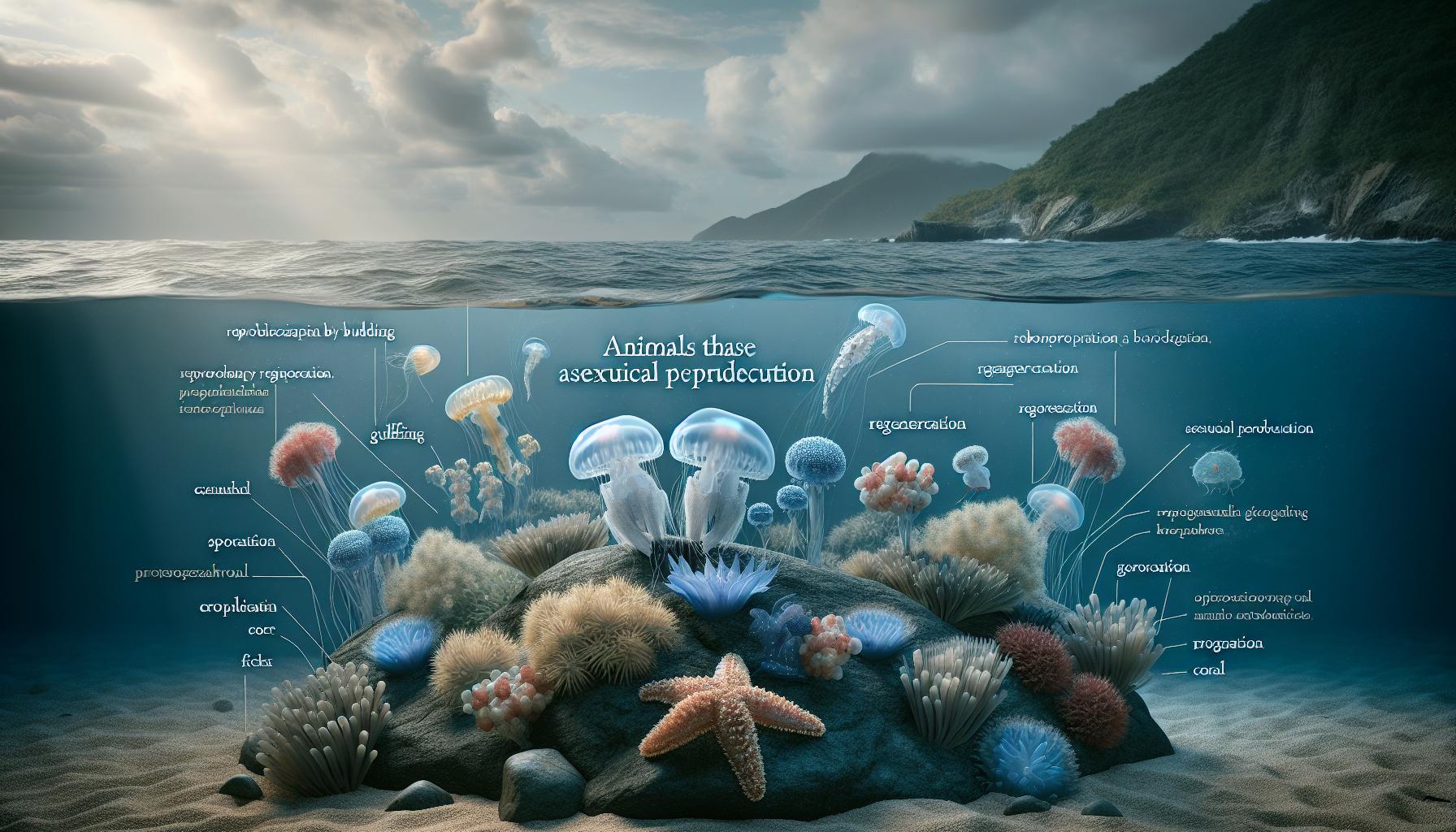
What Is Asexual Reproduction in Animals?
Asexual reproduction in animals is a remarkable biological process that allows organisms to produce offspring without the need for sexual mating. This form of reproduction is predominantly found in simpler life forms, where it facilitates rapid population growth and colonization of environments. While many might picture sex as the only avenue for reproduction, asexual reproduction demonstrates nature’s versatility, showcasing a range of methods that can yield identical offspring from a single parent.
In essence, asexual reproduction involves a single organism dividing or regenerating to create one or more new individuals. Common methods include binary fission, budding, and fragmentation. For instance, in binary fission, a parent organism cells duplicate their genetic material and then divide, effectively creating two identical daughter cells. This method is prevalent among unicellular organisms like bacteria and amoebae, making it an efficient way for these species to thrive and exploit resources quickly.
Budding is another fascinating approach where a new organism develops from an outgrowth or bud on the parent organism. This can be seen in simple animals such as hydra and certain types of corals. In contrast, fragmentation occurs when an organism breaks into several pieces, each capable of developing into a new individual. This method is notably prominent in species like starfish and planarians, which can regenerate lost body parts as part of their reproductive strategy.
One of the significant advantages of asexual reproduction is its ability to support species survival in stable environments. When conditions are right, an organism can rapidly increase its population without the challenges of finding mates. This reproductive strategy is particularly advantageous in isolated ecosystems or after environmental disturbances, where rapid recolonization is essential for ecosystem balance and continuity. Thus, asexual reproduction stands not only as a fascinating biological phenomenon but also as a crucial element supporting the resilience and adaptability of various animal species.
The Fascinating World of Asexual Reproduction
Many might think of reproduction primarily in terms of sexual reproduction, but the world of asexual reproduction reveals a captivating array of strategies that various animals employ to thrive. This process, where offspring are generated from a single parent without the need for fertilization, showcases nature’s ingenious adaptability. From the simplicity of bacteria to the complexity of some marine invertebrates, asexual reproduction is a powerful means through which life continues to flourish in myriad environments.
In the animal kingdom, notable examples include species like the hydra, planarians, and certain types of starfish. For instance, hydra can reproduce by budding, where a small portion of the parent organism grows outward to form a new individual. This method not only allows for rapid population expansion but also affirms the resilience of such organisms in stable environments. Planarians utilize fragmentation; when these flatworms are cut into pieces, each fragment has the remarkable ability to regenerate into a complete organism. Similarly, starfish can regenerate lost arms, which can develop into new individuals, further enhancing their survival strategy.
The benefits of asexual reproduction are profound. This method allows organisms to reproduce quickly, ensuring survival and proliferation, especially in environments where mates may be scarce. Additionally, asexual reproduction supports genetic uniformity, which can be advantageous in stable habitats-ensuring that well-adapted traits are passed on without the variability introduced by sexual reproduction.
As we explore this fascinating aspect of biology, we uncover not just the survival mechanisms of these creatures but also the underlying complexities of life itself. Understanding asexual reproduction offers insight into the evolutionary strategies that have allowed various species to endure and adapt to their environments in unique and surprising ways.
Types of Asexual Reproduction Found in Nature
In the diverse tapestry of life, asexual reproduction stands out as a remarkable strategy that enables many animals to thrive without the need for a mate. This reproductive process allows organisms to produce offspring using various methods, ensuring survival in a wide array of environments. The mechanisms through which animals can reproduce asexually include budding, fission, fragmentation, and regeneration, each exhibiting unique adaptations that facilitate reproduction.
One of the most fascinating forms of asexual reproduction is budding, commonly observed in organisms like hydra. In this process, a new individual develops as an outgrowth from the parent, ultimately detaching and becoming self-sufficient. This method not only facilitates rapid population growth but also offers survival advantages in stable environments where resources are abundant.
Fission is another prevalent form of asexual reproduction, particularly in unicellular organisms such as bacteria and protozoans. In binary fission, the parent organism divides into two nearly identical daughter cells, each capable of growing into a new individual. This simple yet effective method ensures quick proliferation in environments where mates are sparse.
Fragmentation is a remarkable asexual strategy exemplified by planarians and certain types of starfish. When these animals are cut or damaged, each fragment can regenerate into a complete organism. This ability not only aids in population recovery after predation or injury but also underscores the evolutionary advantage of asexual reproduction in maintaining species continuity.
Finally, regeneration, seen in species like starfish, allows lost body parts to regrow and sometimes even develop into new individuals. This regenerative capacity serves multiple ecological roles, from survival against predators to adaptation to environmental changes.
These varied methods of asexual reproduction illustrate the incredible adaptability of animals in their quest for survival. By leveraging these strategies, organisms not only ensure their continuation but also highlight the intricate and often surprising ways through which life sustains itself in nature. Such insights offer a window into the resilience of life and the many forms it takes.
Surprising Examples of Animals That Reproduce Asexually
The animal kingdom presents a wealth of unexpected marvels, particularly in the realm of asexual reproduction. While many might associate reproduction strictly with the need for a mate, certain species exhibit extraordinary capabilities to generate offspring independently. This ability to bypass the typical sexual reproduction process not only ensures their survival but also showcases the incredible adaptability of life on Earth.
Take, for instance, the sea star (or starfish), which can reproduce through a process called fragmentation. If a sea star loses an arm, it doesn’t merely suffer a loss; instead, that arm can regenerate into a fully functioning new individual, given that a portion of the central disc is attached. This remarkable adaptation allows sea stars to thrive in challenging environments, as they can recover from predation or damage while simultaneously increasing population numbers.
Similarly, the horned lizard showcases a fascinating example of asexual reproduction through parthenogenesis. In some species of horned lizards, females can produce offspring without any fertilization from males, essentially cloning themselves. This means that a solitary female can establish a population all on her own, a trait especially useful in habitats where mates may be scarce.
Another striking example is the jellyfish, specifically the moon jellyfish, which can reproduce both sexually and asexually. During their lifecycle, they can form tiny clones through a process called budding. These clones detach from the parent and develop into new individuals, allowing jellyfish to colonize environments effectively due to their significant reproductive output and resilience.
Lastly, consider the planarian, a flatworm known for its incredible regenerative capabilities. When cut into fragments, each piece can regenerate into a complete organism, enabling a single planarian to multiply significantly. This ability not only supports population recovery but also illustrates the complex interplay between growth, survival, and asexual reproduction in the natural world.
These examples highlight the ingenious strategies various species have evolved to ensure their continued existence. By adopting asexual reproduction methods, these animals can rapidly populate their environments, which often proves vital in survivability and adaptability in fluctuating ecosystems.
The Benefits of Asexual Reproduction for Survival
Asexual reproduction provides remarkable survival advantages to many animal species, enabling them to thrive in various environments without the necessity for a mate. One of the primary benefits is the ability to reproduce rapidly, which can be critical in environments where population numbers are low or where ecological conditions fluctuate dramatically. For example, organisms like the planarian can regenerate from fragments, allowing a single individual, when severed, to produce multiple new organisms. This not only enhances survival after physical damage but also accelerates population recovery in their habitats.
Additionally, asexual reproduction allows species to exploit unoccupied niches effectively. When resources are abundant, animals like jellyfish can reproduce through budding, generating new individuals swiftly. This method ensures they can colonize new areas, bolstering their populations rapidly. Moreover, species that reproduce asexually can sustain themselves in isolated environments, where finding a mate may be impractical. The horned lizard, for example, can reproduce via parthenogenesis, allowing solitary females to establish reproductive success in challenging habitats.
Another significant advantage of asexual reproduction is genetic stability. While sexual reproduction introduces genetic variability, asexual reproduction can perpetuate successful genetic traits in a stable environment. This stability can be advantageous in well-adapted ecosystems where conditions remain constant, enabling organisms to maintain their successful evolutionary traits over generations. Overall, the flexibility and resilience that asexual reproduction provides play an essential role in the survival strategies of many animal species within an ever-changing world.
How Asexual Reproduction Supports Biodiversity
Asexual reproduction plays a pivotal role in supporting biodiversity across various ecosystems. By enabling organisms to reproduce without the need for a mate, this mode of reproduction enhances genetic spread and population stability, which is essential in maintaining ecological balance. Species like the sea star can regenerate and form new individuals from severed limbs, allowing them to respond rapidly to environmental changes or predation pressures. This capability not only contributes to the resilience of their populations but also ensures their presence in diverse habitats.
Moreover, asexual reproduction fosters colonization and expansion into unoccupied niches. For instance, hydras can produce buds that detach to form new individuals, allowing them to quickly inhabit new areas. This adaptability can propel the rapid establishment of populations in diverse ecological conditions, leading to an increase in overall biodiversity. Organisms that reproduce asexually, such as flatworms, can thrive in isolated environments where traditional mating might not be feasible, thus ensuring their survival.
Another significant aspect of asexual reproduction is its contribution to genetic stability within populations. Since asexual reproduction often produces genetically identical offspring, successful adaptations can be preserved in consistent environments. This uniformity can be advantageous in stable ecosystems, where maintaining particular traits over generations can be crucial for survival. However, as environmental conditions change, the lack of genetic diversity may pose risks, highlighting the delicate balance that asexual reproduction strikes in supporting biodiversity.
In summary, the mechanisms of asexual reproduction not only enhance survival and adaptation strategies among various organisms but also serve as a vital mechanism for fostering and sustaining biodiversity. By understanding these processes, we can appreciate the intricate connections that bind ecological communities and the survival strategies of the species that inhabit them.
Asexual vs. Sexual Reproduction: Key Differences
The fascinating world of reproduction showcases two primary pathways through which organisms propagate their species: asexual and sexual reproduction. Both methods have their own unique advantages and play essential roles in the survival and adaptation of different species. Asexual reproduction, observed in animals such as hydras and sea stars, allows for the creation of offspring without the involvement of gametes from two parents. This form of reproduction is often simpler and faster, enabling species to rapidly increase their population numbers in favorable conditions.
In contrast, sexual reproduction involves the combination of genetic material from two parents, resulting in offspring with genetic diversity. This genetic variation can enhance a population’s ability to adapt to changing environments, equipping some individuals with traits that may better suit them for survival. For example, in populations subjected to environmental stresses, the offspring produced through sexual reproduction may inherit advantageous traits from either parent, thus potentially increasing their overall fitness.
When considering examples between the two reproductive strategies, take the hydra, which reproduces asexually through budding, compared to the more genetically diverse offspring of species like the bluebird, which relies on sexual reproduction. Each strategy offers distinct survival mechanisms: while asexual reproduction ensures quicker population growth and stability in uniform habitats, sexual reproduction capitalizes on diversity, ultimately providing species with the tools needed to thrive in varied and unpredictable environments.
Ultimately, understanding these contrasting approaches helps to emphasize the adaptive strategies animals employ in their respective ecosystems. Asexual reproduction may seem less complicated, yet it serves crucial roles within certain environmental niches, while sexual reproduction enriches populations, allowing them to evolve and respond effectively to life’s myriad challenges.
The Science Behind Asexual Reproduction Mechanisms
Asexual reproduction in animals is a remarkable process that enables organisms to propagate without the need for genetic contributions from a mate. This form of reproduction is not only efficient but also allows certain species to thrive in stable or favorable environments, where quick population expansion can be advantageous. The underlying mechanisms of asexual reproduction can vary widely among species, illustrating a captivating range of strategies.
One of the most well-known mechanisms is budding, as seen in hydras. In this process, a new individual develops as an outgrowth (or bud) from the parent organism. As the bud grows, it gradually separates from the parent and becomes an independent organism, genetically identical to its parent. Another prevalent method is binary fission, utilized by unicellular organisms like bacteria and amoebae. In binary fission, the organism duplicates its genetic material and divides into two, yielding two identical daughter cells.
Furthermore, certain species of flatworms demonstrate a unique method of asexual reproduction called fragmentation. Here, if a flatworm is cut into pieces, each piece can regenerate into a new, complete organism, which underscores the remarkable regenerative capabilities of these creatures. This highly effective method ensures that even if segments of the population are lost, reproduction can still occur under less-than-ideal conditions.
Animals like sea stars are also notable examples, as they can reproduce asexually through regeneration. If a sea star loses an arm, it can grow back a complete new star from just a part of an arm, given a portion of the central disk is intact. This ability not only aids in reproduction but also in survival, allowing sea stars to endure predation through regeneration.
Asexual reproduction offers several benefits, including rapid population growth and the maintenance of successful genetic traits in stable environments. However, it comes with limitations, such as reduced genetic diversity, which is critical for adaptation in changing environments. Understanding these mechanisms not only highlights the incredible adaptability of various animal species but also emphasizes the numerous strategies they employ for survival and propagation in their respective habitats.
Impact of Environmental Factors on Asexual Reproduction
Environmental factors play a significant role in the effectiveness and prevalence of asexual reproduction among various animal species. Conditions such as temperature, availability of resources, and habitat stability can influence how and when these organisms reproduce. For instance, in environments where resources are abundant and conditions are favorable, many organisms may opt for asexual methods to quickly increase their populations. This strategy allows them to maximize their reproductive success without the need for a mate, which can be advantageous in isolated or sparse habitats.
Temperature and Reproduction Rates
Temperature is one of the critical environmental factors affecting asexual reproduction. For many species, optimal temperatures can enhance metabolic rates, leading to quicker growth and reproduction. For example, certain freshwater hydra species can reproduce through budding at higher temperatures, enabling them to exploit seasonal abundance of food. Conversely, extreme temperatures can hinder reproductive processes, causing these organisms to enter a state of dormancy until conditions improve.
Resource Availability
Availability of resources such as food and space directly impacts asexual reproduction. In nutrient-rich environments, animals like sea stars can reproduce through regeneration effectively. When conditions are right, the speed at which these creatures can regenerate lost limbs and propagate can lead to rapid increases in population size. However, in times of scarcity, the energy required for regeneration could result in decreased reproductive rates, highlighting the delicate balance that organisms must maintain concerning their environment.
Habitat Stability
Stable habitats are often conducive to asexual reproduction, allowing species to thrive without the genetic variability that sexual reproduction offers. For instance, certain flatworm species can develop from fragments even in disrupted environments, ensuring their survival and continued reproduction despite potential challenges. However, changes in habitat-such as pollution or climate change-can disrupt these processes, leading to a significant impact on populations.
Understanding these environmental influences is crucial. By analyzing how variables like temperature, resource availability, and habitat stability affect asexual reproduction, researchers can better predict population dynamics and the future viability of various species in changing ecosystems. This knowledge empowers conservation efforts aimed at protecting these fascinating organisms and their environments, ensuring that they continue to flourish even in the face of environmental challenges.
Are There Limitations to Asexual Reproduction?
A fascinating aspect of asexual reproduction is that, while it offers several advantages, it comes with inherent limitations that can affect the survival and adaptability of the organisms that rely on it. One fundamental drawback of asexual reproduction is the lack of genetic diversity. Since asexual reproduction generates offspring that are genetically identical to the parent, it can lead to a population that is more vulnerable to diseases and environmental changes. A homogenous genetic make-up means that if a new pathogen emerges or if conditions shift dramatically, the entire population may struggle to adapt or survive.
Moreover, the rapid population growth enabled by asexual reproduction can lead to resource depletion. When species like hydra reproduce by budding or sea stars regenerate lost limbs, they can quickly expand their numbers in nutrient-rich environments. However, this growth can lead to overcrowding and competition for limited resources, ultimately resulting in population crashes when resources become scarce. The energy that would typically be used for growth and reproduction may instead be redirected toward survival, limiting the ability of the population to sustain itself long-term.
Further, certain forms of asexual reproduction require specific environmental conditions. For instance, some species may only reproduce asexually during favorable conditions, while adverse environments can halt these processes altogether, leaving individuals unable to reproduce. This cycling through asexual and sexual reproduction can be seen in some flatworms, which may only switch to sexual reproduction under stress, thus reducing their overall reproductive rate during challenging times.
In conclusion, while asexual reproduction is a remarkable survival strategy for many animals, it is essential to recognize its limitations. The lack of genetic diversity, potential for resource exhaustion, and reliance on favorable conditions are all factors that can hinder the long-term viability of populations that depend solely on asexual methods for reproduction. Understanding these limitations is crucial for conservation and management efforts aimed at protecting these species in changing ecosystems.
Future Research Directions in Asexual Reproduction
The study of asexual reproduction continues to unveil the complexities of how various organisms thrive in diverse environments. Future research directions focus on uncovering the genetic and environmental factors that enable these organisms to adapt and reproduce effectively without sexual reproduction. One promising area of exploration involves the molecular mechanisms behind asexual reproduction, particularly in species such as planarians and hydras, which exhibit fascinating regenerative capabilities. Understanding how these animals utilize cells to reproduce asexually can reveal insights into potential applications in medicine and regeneration science.
Another critical avenue of research is the impact of climate change and environmental pressures on asexual reproduction. As habitats alter due to shifting temperatures and ecosystems, understanding how animals like sea stars and some species of lizards adapt their reproductive strategies in response to stressors is vital. By analyzing these adaptations, researchers can develop strategies for conservation and habitat management that support the resilience of these organisms.
Furthermore, the potential benefits of asexual reproduction for biodiversity are gaining traction in scientific discourse. Future studies may investigate how asexual species contribute to ecological stability and community dynamics. For instance, the role of asexually reproducing organisms in nutrient cycling and food webs could illuminate their importance in broader ecological contexts, emphasizing the necessity of preserving their populations amidst environmental challenges.
Innovative techniques such as gene editing and advanced genomic sequencing are also paving new paths in research. By employing these tools, scientists can delve deeper into the genetic basis of asexual reproduction, potentially identifying key genes that control this process. This knowledge could not only enhance our understanding of asexual organisms but also inspire biotechnological advancements in agriculture and medicine where rapid propagation of beneficial traits is desirable.
In summary, the future of research in asexual reproduction holds exciting possibilities that can expand our understanding of biology and ecological balance. As we explore these avenues, it is crucial to continuously assess the implications of our findings on conservation efforts and the maintenance of biodiversity in an ever-changing world.
Myths and Misconceptions About Asexual Reproduction
Many people believe that asexual reproduction is a simpler or inferior form of reproduction compared to sexual reproduction. However, this common misconception overlooks the incredible complexity and adaptability of organisms that utilize this method. Asexual reproduction can occur through various mechanisms, such as binary fission in bacteria, budding in yeast, and even fragmentation in starfish, showcasing a range of evolutionary strategies that are quite sophisticated in their own right.
Another myth is that animals that reproduce asexually are “less evolved” than those that reproduce sexually. In reality, asexual reproduction shines in specific contexts where rapid population growth is necessary for survival, such as in stable environments where resources are abundant. For instance, certain species of lizards and sea stars can reproduce asexually when faced with environmental stressors, allowing them to quickly establish their presence and maintain ecological balance.
It’s also important to clarify that asexual reproduction does not mean a lack of genetic variation. Many asexually reproducing organisms can still experience genetic changes through mutations or horizontal gene transfer, which can enhance their adaptability to changing environments. This process can create diversity within populations, contrary to the belief that asexual reproduction leads to homogeneity.
Additionally, some may think that asexual reproduction is the sole method of reproduction for certain species; however, many organisms, like the green anole lizard, can switch between sexual and asexual reproduction based on environmental conditions. This flexibility highlights the advantage of asexuality in specific scenarios without negating the benefits of sexual reproduction in others. Understanding these nuances helps cultivate a more realistic perspective on how diverse reproduction strategies contribute to the resilience of life on Earth.
FAQ
Q: What are some surprising examples of animals that reproduce asexually?
A: Some surprising examples of animals that reproduce asexually include sea stars, which can regenerate from fragments, and planarians, which can split in half and each half grows into a new individual. Other examples include hydras and some species of jellyfish, showcasing the diversity of asexual reproduction in the animal kingdom.
Q: How does asexual reproduction benefit certain animal species?
A: Asexual reproduction allows species to reproduce rapidly and efficiently, especially in stable environments. It helps in colonization of new habitats and can enhance survival when mates are scarce. This method is particularly beneficial for organisms like bacteria and corals that thrive in their environments without the need for a mate.
Q: Why do some animals prefer asexual reproduction over sexual reproduction?
A: Some animals prefer asexual reproduction to avoid the costs associated with finding a mate and to produce offspring quickly. In challenging environments, this strategy can ensure species survival without the need for male-female interactions, as seen in certain species of aphids and flatworms.
Q: What types of asexual reproduction are found in animals?
A: Types of asexual reproduction in animals include fission, where an organism splits into two; budding, where new organisms grow from the parent; and fragmentation, where pieces of the parent can develop into new individuals. These methods are common in sponges and sea anemones.
Q: Are there any limitations to asexual reproduction in animals?
A: Yes, asexual reproduction can limit genetic diversity within a population, making species more vulnerable to diseases and environmental changes. In some cases, a lack of genetic variation can hinder the evolutionary adaptability of species, potentially threatening their long-term survival.
Q: How do environmental factors influence asexual reproduction in animals?
A: Environmental factors such as temperature, availability of resources, and population density can significantly impact asexual reproduction. For instance, animals may reproduce asexually in stable environments but shift to sexual reproduction when conditions become unfavorable, promoting genetic diversity.
Q: What role does asexual reproduction play in biodiversity?
A: Asexual reproduction contributes to biodiversity by allowing species to thrive in various environments without depending on mates. This reproductive strategy can lead to the rapid spread of successful traits, especially in organisms such as bacteria and somatic cells of certain multicellular species.
Q: Can all animals reproduce asexually?
A: No, not all animals can reproduce asexually. Most animals reproduce sexually, though some species, primarily in lower taxa such as invertebrates, have adapted asexual reproduction as a strategy. It’s more common among certain plants, fungi, and microorganisms than in vertebrates.
Concluding Remarks
Thank you for exploring the fascinating world of asexual reproduction in animals. As we’ve discovered, this unique form of reproduction offers surprising advantages and showcases nature’s incredible adaptability. If you’re intrigued by the remarkable strategies of life, don’t stop here! Dive deeper into related topics like our article on “The Pros and Cons of Asexual Reproduction” or uncover the secrets behind “How Various Species Utilize Reproduction.”
We encourage you to share your thoughts or questions in the comments below-your engagement helps us create more content you love. Stay tuned for our upcoming articles, or sign up for our newsletter to receive the latest insights and discoveries in biology right to your inbox. Keep your curiosity alive and continue your journey of learning with us!